
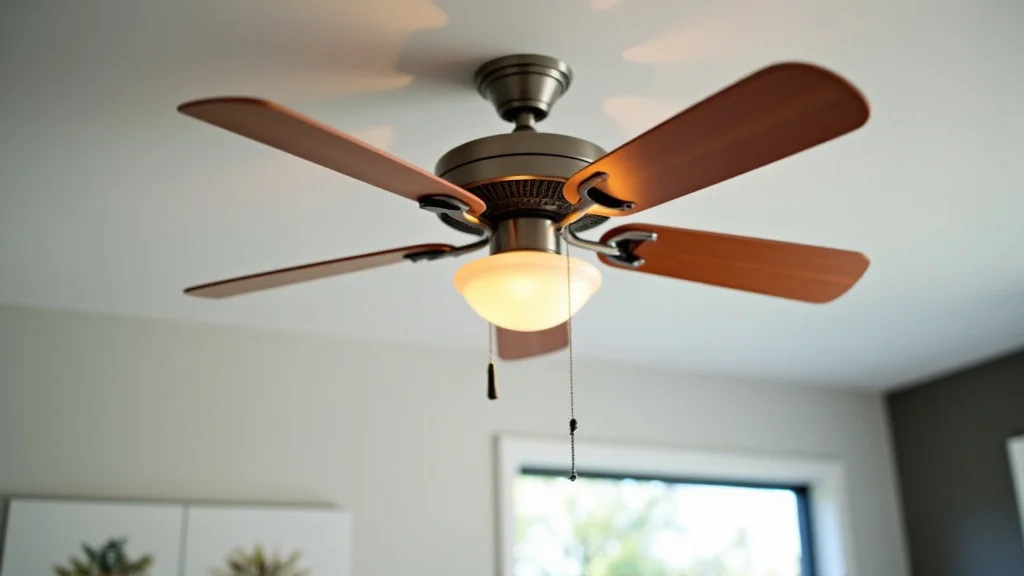
Picture this: a chilly evening, you’re nestled on the couch, but a persistent draft makes the room feel colder than it is. You glance up at your ceiling fan, wondering if it can help. Many people don’t know the proper direction for a ceiling fan’s blades during the colder months, leading to inefficient heating and wasted energy. This guide will clarify the best approach for which way should a ceiling fan turn in winter, helping you maximize your comfort and minimize your energy bills. You’ll gain a deeper appreciation for how simple adjustments can have a significant impact, improving your home’s energy efficiency and your overall comfort. Ready to learn the secret to a warmer home?
Key Takeaways
- Ceiling fans in winter should rotate clockwise when viewed from below.
- This clockwise rotation pushes warm air downwards, circulating it throughout the room.
- The reverse rotation helps eliminate cold drafts from the room.
- Reversing the fan direction is a straightforward process often done with a switch.
- Using the right fan direction can significantly improve your home’s energy efficiency.
- This simple adjustment can make your home feel warmer and more comfortable.
Understanding Ceiling Fan Direction
Ceiling fans are a versatile appliance, offering benefits year-round. They’re not just for cooling; they play a crucial role in improving your home’s heating efficiency during winter. By understanding the science behind air circulation, you can significantly enhance your comfort and reduce your energy expenses. The key lies in how the blades move and the effect this has on the air currents in your room. The goal is to move the warm air that naturally rises near the ceiling, distributing it throughout the living space. Properly setting your ceiling fan’s direction can make a big difference.
How a Fan Directs Airflow
The direction a ceiling fan spins determines how it moves the air. In summer, the blades typically spin counterclockwise, creating a downward breeze that offers a cooling effect. The angled blades create a downward airflow, making you feel cooler as the air hits your skin. However, in winter, the strategy changes. The primary aim is to gently push the warm air that has risen towards the ceiling back down into the room. This improves heat distribution and reduces the need for higher thermostat settings. Understanding this simple principle makes the difference between a comfortable winter and a chilly one.
- Counterclockwise Rotation (Summer Mode): The blades push air downwards, creating a direct breeze that provides a cooling sensation.
- Clockwise Rotation (Winter Mode): The blades gently push the air upwards and out towards the walls, where it then drops back down, creating an air circulation and evenly distributing warm air.
- Blade Angle Impact: The angle of the fan blades affects the airflow. More aggressively angled blades create a stronger downdraft, while less angled blades create a gentler updraft or airflow.
- Motor Efficiency: Modern ceiling fans are designed to operate efficiently in both directions, consuming minimal energy.
The Science Behind Air Circulation
Warm air naturally rises due to its lower density. This creates a stratification effect where the ceiling is warmer than the floor. This difference is called thermal stratification. Your heating system works to warm the air, but without proper circulation, it can be inefficient, as much of the warmth stays near the ceiling. A ceiling fan, when spinning clockwise, addresses this issue. The fan gently pushes the warm air down, mixing it with the cooler air near the floor. This creates a more uniform temperature distribution, reducing temperature differences throughout the room. By understanding how air currents behave, you can maximize your heating system’s performance and enjoy a more comfortable living space.
- Convection Currents: The movement of warm air upwards and cooler air downwards creates natural convection currents.
- Air Density: Warm air is less dense and rises, while cool air is denser and sinks.
- Heat Distribution: A ceiling fan helps distribute the rising warm air, improving comfort.
- Energy Savings: Properly distributing heat means you can lower your thermostat, saving energy and money.
Reversing Your Ceiling Fan’s Direction
Changing the direction of your ceiling fan is a straightforward task, and most models are designed for easy reversibility. This process ensures your fan operates optimally throughout the year, adapting to seasonal needs. The location of the switch varies by model, but it is typically located on the fan’s motor housing. When preparing to switch the fan direction, always begin by turning off the power to the fan. This safety step protects you from any potential electrical hazards. Whether your ceiling fan has a manual switch or a remote control, familiarizing yourself with the process ensures you’re ready to adjust your fan’s operation to suit the season.
Locating the Direction Switch
Finding the reverse switch is the first step in switching your fan’s direction. The location of the switch varies depending on the fan model and design. Usually, you’ll find it on the motor housing, the cylindrical part that holds the blades. The switch is often a small slider button labeled “Forward” and “Reverse” or sometimes indicated with arrows showing the direction of rotation. Some fans have the switch located on the remote control, allowing you to change the direction conveniently. In a modern fan, you might only need to use the remote to change the rotation. Be sure to consult your fan’s manual for specific instructions if needed.
- Motor Housing: The most common location is on the motor housing.
- Remote Control: Newer models often use the remote control for direction adjustments.
- Wall Switch: Some fans can be wired to a wall switch for easy control.
- Manual: Always consult the user manual for model-specific instructions.
Switching the Fan Direction: A Step-by-Step Guide
Changing your ceiling fan’s direction is usually a quick process. First, shut off the power to the fan at the circuit breaker for safety. Locate the direction switch, and move it to the opposite position. Then, give the fan blades a gentle push to start them. Turn the power back on and let the fan run for a few minutes. Check that the rotation is correct (clockwise when looking up from below) to ensure warm air is being pushed down. The process is simple and takes just a few moments but delivers significant benefits for your comfort and energy efficiency. Always double-check the direction of the rotation.
- Turn Off the Power: Go to your circuit breaker and turn off the power to the fan.
- Locate the Switch: Find the reverse direction switch, usually on the motor housing.
- Switch the Direction: Slide the switch to the opposite position (usually labeled “Reverse” or a clockwise arrow).
- Test the Fan: Turn the power back on and observe the fan’s rotation (clockwise).
- Adjust Speed: Adjust the fan speed to your desired comfort level.
Choosing the Right Fan Speed in Winter
The appropriate fan speed during winter is crucial for effective heat distribution. While you want to circulate warm air, you don’t want to create a strong breeze that makes the room feel cold. The goal is gentle air movement, a subtle push that redistributes the warm air without causing discomfort. Experimenting with different speeds can help you find the best setting for your space. Using a lower fan speed allows for quiet operation. As a result, you’ll maximize the efficiency of your heating and improve your overall comfort. The optimal speed is often moderate to low.
Finding the Optimal Fan Speed
Experimentation is key to discovering the ideal fan speed for your comfort. The best setting depends on several factors, including the size of the room, the height of your ceiling, and the level of insulation in your home. Start with a low or medium setting and monitor how it feels. If you’re not noticing a difference in temperature or air circulation, increase the speed slightly. A good starting point is the lowest setting. The goal is to feel a gentle warmth throughout the room, rather than a noticeable draft. You may need to adjust the speed as the outside temperature changes or as the room heats up.
- Room Size: Larger rooms might require a slightly higher speed.
- Ceiling Height: High ceilings generally benefit from a lower speed.
- Insulation: Well-insulated homes may require less air circulation.
- Comfort Level: Adjust the speed until you find a comfortable level of warmth.
Energy-Efficient Fan Operation
Operating your ceiling fan efficiently helps reduce your energy consumption. One of the primary advantages of reversing your fan direction is the potential to lower your thermostat setting. By circulating the warm air, you can feel warmer without raising the overall temperature in the room. This simple change can translate to real savings on your heating bill. A ceiling fan uses much less energy than a furnace. Regular maintenance, such as cleaning the blades, can also improve efficiency by preventing dust buildup. Considering the direction and speed of your ceiling fan, you can take a step toward a greener lifestyle and a more comfortable home.
- Lower Thermostat Settings: Distributing warm air allows you to comfortably lower your thermostat.
- Regular Maintenance: Keeping your fan blades clean improves efficiency.
- Energy Consumption: Ceiling fans consume significantly less energy than heating systems.
- Smart Controls: Programmable and smart fans offer further energy-saving capabilities.
Frequently Asked Questions About Ceiling Fan Direction
Many homeowners have questions about the best way to utilize ceiling fans during the winter. This section addresses some of the most common queries, providing clear answers to help you get the most out of your ceiling fan. From understanding the technical aspects of air circulation to addressing misconceptions, we aim to provide all the information you need. These frequently asked questions will help you better understand the impact of your ceiling fan on your home’s heating and how to optimize its use.
Question: Should I reverse my ceiling fan in the winter?
Answer: Yes, you should reverse your ceiling fan in winter. Changing the direction to clockwise, when viewed from below, allows the fan to push warm air that rises near the ceiling back down into the room, improving heat distribution and comfort.
Question: How do I know if my ceiling fan is rotating the correct way?
Answer: When the fan is in winter mode, it should be rotating clockwise when you look up at it. The blades should be pushing air upwards towards the walls and then down into the room.
Question: What’s the best fan speed for winter?
Answer: For winter, use a low to medium fan speed. The goal is to gently circulate the warm air without creating a noticeable draft, ensuring even heat distribution throughout the room.
Question: Can a ceiling fan really help save energy in winter?
Answer: Absolutely, a ceiling fan in the correct mode helps to improve your home’s energy efficiency. By circulating warm air, it enables you to lower your thermostat setting, reducing the energy needed to heat your home.
Question: Do all ceiling fans have a reverse switch?
Answer: Most modern ceiling fans have a reverse switch, typically found on the motor housing or the remote control. However, it’s wise to review the user manual of your fan to locate the switch on your specific model.
Final Thoughts
Knowing which way should a ceiling fan turn in winter is simple, but its impact is substantial. By switching the fan direction to clockwise, you can improve the evenness of the temperature in your living space. This results in greater comfort and can help you lower your thermostat setting, reducing energy costs. Remember that the correct fan direction helps circulate warm air, pushing it back down from the ceiling. Regularly maintaining your fan and using the right speed for your needs can enhance the efficiency of your heating system. Take the time to adjust your fan’s direction and experience the comfort and energy savings. By making this simple change, you can create a warmer, more welcoming environment in your home.